
- Zpacks Duplex Lite at a glance
- Construction of the Zpacks Duplex Lite
- How to setup the Duplex Lite
- Reliable Weather Protection
- How much space does the Duplex Lite offer?
- Weather resistance of the Duplex Lite
- My experiences with condensation
- How durable is the Zpacks Duplex Lite?
- Where can vou buy the Duplex Lite?
- My verdict on the Zpacks Duplex Lite
Tents from Zpacks are considered something of a holy grail among ultralight hikers: incredibly lightweight, surprisingly capable in rough weather, and unfortunately also quite expensive. The brand’s most popular model is the Zpacks Duplex, which is frequently described as the lightest two-person tent in the world.
Now there’s an even lighter version of that tent: the Zpacks Duplex Lite*. Including its stuff sack, the shelter weighs just 15.2 oz (431 g). Even if you factor in the weight of trekking poles for pitching, that’s still remarkably light for a fully functional two-person tent.
Which naturally raises the question: how well does such an ultralight shelter perform in real outdoor conditions?
The bottom line: the Zpacks Duplex Lite is an excellent tent. It’s quick and straightforward to pitch and offers reliable protection from the elements for weight-conscious ultralight hikers, even in harsh conditions. At the same time, the design is unapologetically minimalist. That keeps the weight impressively low — but, as with any ultralight piece of gear, it comes with a few trade-offs.
What I like about the Duplex Lite
- Extremely lightweight — so light you barely notice it in your pack
- Very quick and easy to pitch
- Excellent weather protection even in harsh conditions
What could be improved
- High price tag
- Less abrasion-resistant than heavier tent fabrics
- Currently only available via import in many countries
So, let’s take a closer look at the Duplex Lite!
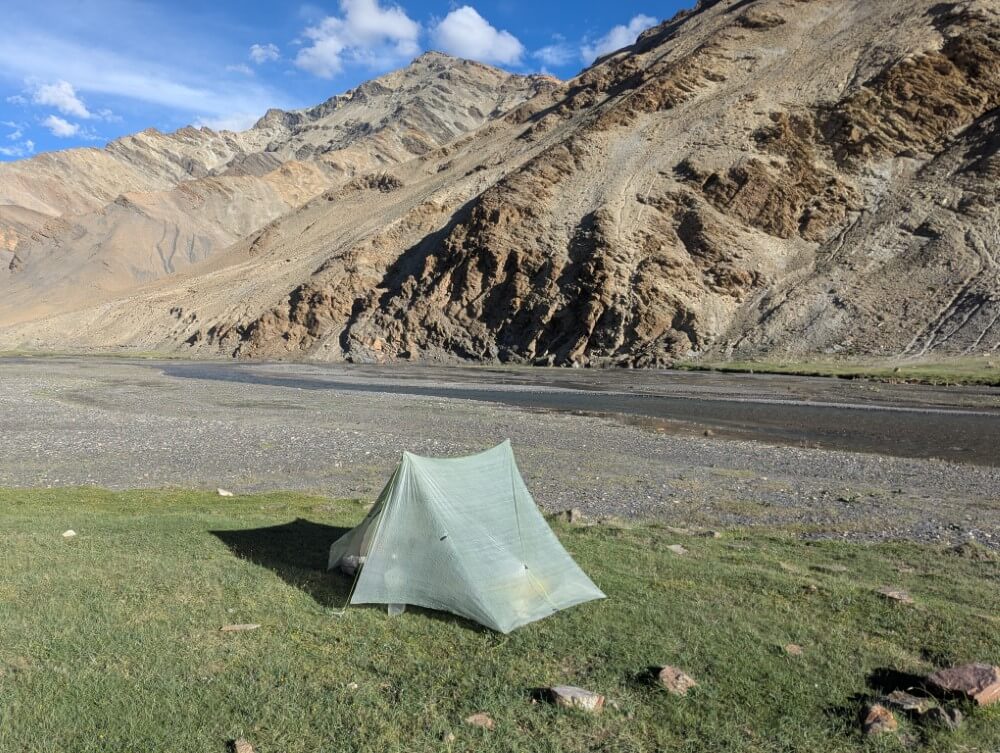
Zpacks Duplex Lite Review: At a glance
The Zpacks Duplex Lite is a non-freestanding, single-wall shelter made from ultralight Dyneema Composite Fabric. It requires two trekking poles for pitching and is designed primarily for three-season conditions. In return, it delivers an impressive combination of extremely low weight, compact pack size, and outstanding performance in the backcountry.
The tent is weatherproof and 100% waterproof, but the overall design is fairly airy. The materials are also quite delicate and require careful handling. For one person, the Duplex Lite offers plenty of space. As a two-person tent, however, it may feel a bit cramped over longer periods. The Duplex Lite is directly available from Zpacks. Non-US-Citizens who want to import the tent may need to pay additional customs fees.
Technical specs of the Zpacks Duplex Lite:
| Type | single-wall 3-season backpacking tent |
| Suitable for | trekking, camping, backpacking, fastpacking, bikepacking, |
| Persons | 1-2 |
| Outer fly | 15,5 g/m2 Dyneema Composite Fabric, hydrostatic head 15.000 mm |
| Tent floor | 25,5 g/m2 Dyneema Composite Fabric, hydrostatic head 20.000 mm |
| Insect protection | 19 g/ m2 Ultralight Nano-Noseeum Mesh |
| Entries | 2 |
| Apsides | 2 |
| Size inner tent | 230 x 102 x 122 cm (LxBxH) |
| Size packed | 30 x 15 cm (LxB) |
| Weight | 14,9 oz, 431 gram (tent: 423 gram, bag: 8 gram) |
| Colors | Blue, Olive Green, White |
| Keep in mind | stakes + trekking poles required for setup (not included) |
| Price | 669 USD, available via direct order at Zpacks* |
Field Testing
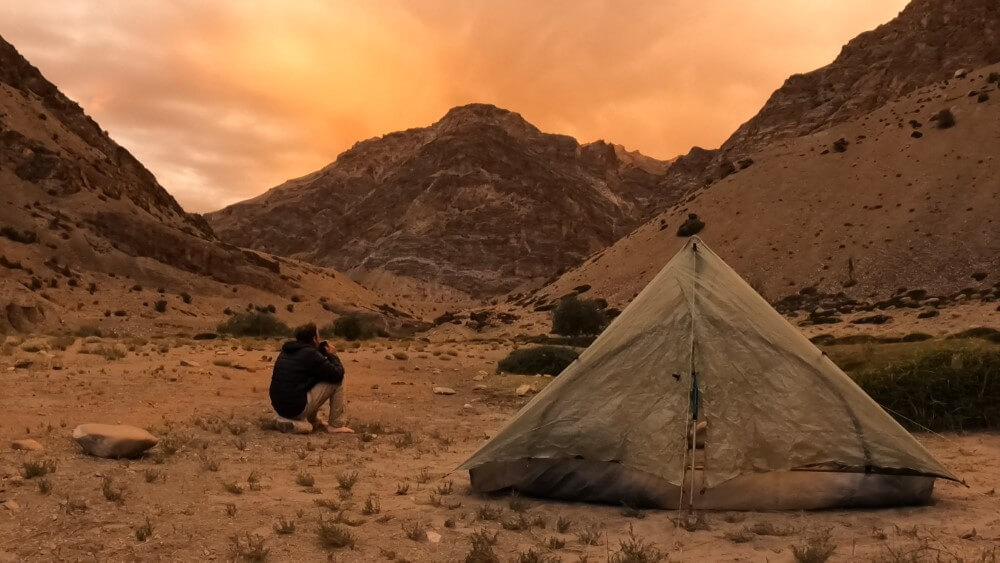
I’ve been using the Duplex Lite since early 2024. My first trips with the tent took place on shorter camping outings in Germany and in the northern Italian Alps. Real field testing happened in 2025 during an eight-month journey through the Himalayas, where I relied on the shelter on several long high-altitude treks — including a 500-kilometer traverse across the mountain desert of Ladakh and Zanskar.

Conditions were about as varied as the Himalaya gets. I camped in mild valley climates, dealt with freezing temperatures on high passes in spring, and experienced strong winds and storms at exposed camps above 5,000 meters. The tent was also exposed to intense UV radiation in the alpine desert landscapes of Ladakh and Zanskar, and even a snowstorm while crossing the main Himalayan range.
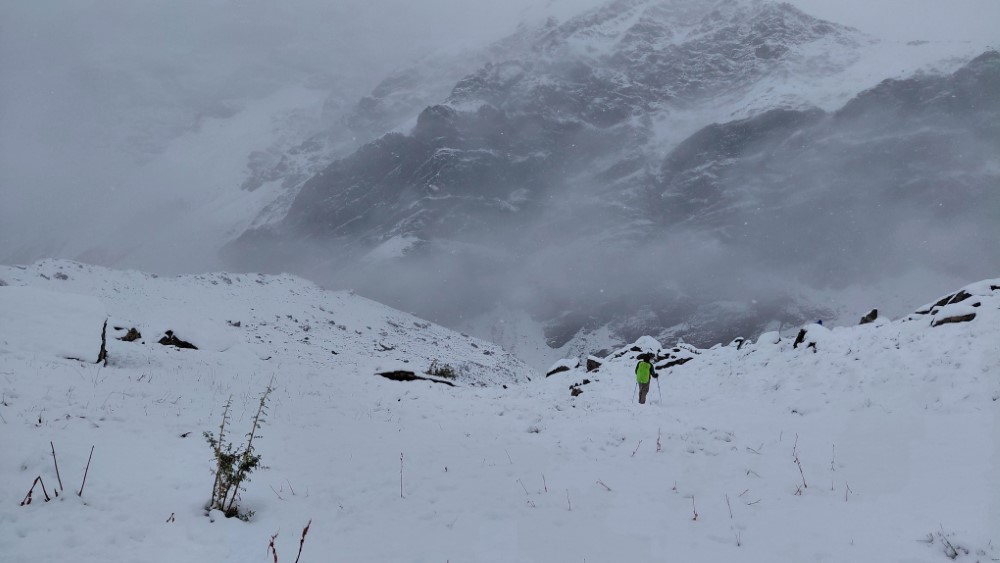
Taken together, these conditions cover pretty much everything a three-season tent can realistically be expected to handle.
Disclosure: The Duplex Lite was provided by Zpacks for testing without any conditions attached. All opinions expressed in this review are entirely my own.

Zpacks Duplex Lite vs. Zpacks Duplex vs. Zpacks Duplex Zip
Before diving into the actual review, there’s one important thing potential buyers should know: the Duplex Lite isn’t an entirely new design. Instead, it’s a lighter evolution of the popular Zpacks Duplex.
At the moment, Zpacks offers three different versions of the Duplex:

All three models are made from ultralight Dyneema Composite Fabric, share the same A-frame design, and are pitched using two trekking poles*. The Duplex Zip adds zippered doors and magnetic fly clips, which increase the weight by about 50 grams.
Compared to the standard Zpacks Duplex, the Duplex Lite features the following differences:
| Zpacks Duplex Lite | Zpacks Duplex |
|---|---|
| Width inner tent: 102 cm | Width inner tent: 114 cm |
| Weight tent floor: 25,5 g/m2 DCF | Weight tent floor: 28,3 g/m2 DCF |
| Width guylines: 1.3 mm | Width guylines: 2.0 mm |
| Height bathtub floor: 15 cm | Height bathtub floor: 20 cm |
In essence, the Duplex Lite uses a slightly thinner tent floor, lighter guylines, offers a bit less interior width, and features a slightly lower bathtub floor. These changes allow Zpacks to cut the weight by roughly 25% compared to the standard Duplex.
Design and build of the Zpacks Duplex Lite
The Zpacks Duplex Lite is a single-wall shelter without a separate inner tent. Instead, it uses a Dyneema fly with integrated insect mesh along the sides. The shelter is pitched with two trekking poles and, once set up, forms a classic A-frame structure with sloping sidewalls.

The tent is not freestanding, which means it needs to be anchored to the ground with stakes. For this, I typically use lightweight yet sturdy MSR Groundhog stakes*. A minimum of six stakes is required, but the shelter has eight guy-out points, and in my experience it’s best to use all of them. This improves stability in strong winds and allows you to tension the head and foot panels a bit more, creating slightly more usable space inside the tent.
No inner tent required
Even without a separate inner tent, the Zpacks Duplex Lite provides reliable protection from the elements. The interior space is defined by the bathtub floor, which automatically lifts into place during setup. The fly is then tensioned above the floor, creating a design where the living space sits slightly elevated. In the end, it almost looks as if the shelter is floating just above the ground.
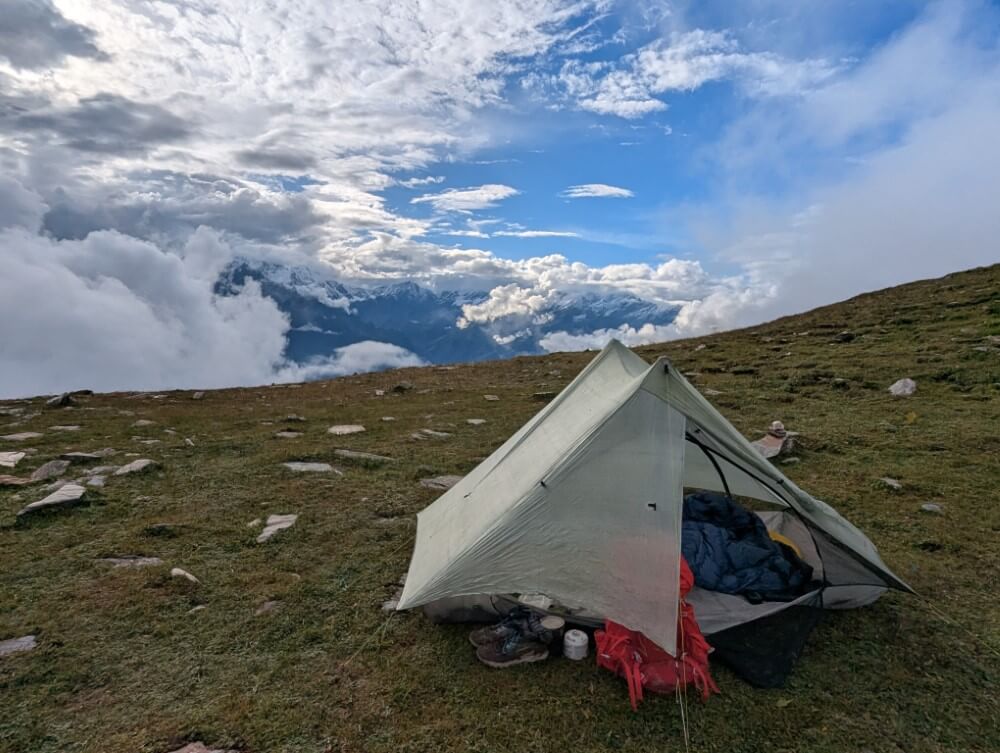
At first glance, this construction may look a little funny, but it’s actually quite clever. The bathtub floor is fairly high (around 6 inches), providing solid protection from water and splashback in heavy rain. The sloping fly walls also help shed rain effectively. At the same time, the relatively large gap between the ground and the fly promotes good airflow. I’ll cover condensation in more detail further below.

Dual entrances and vestibules
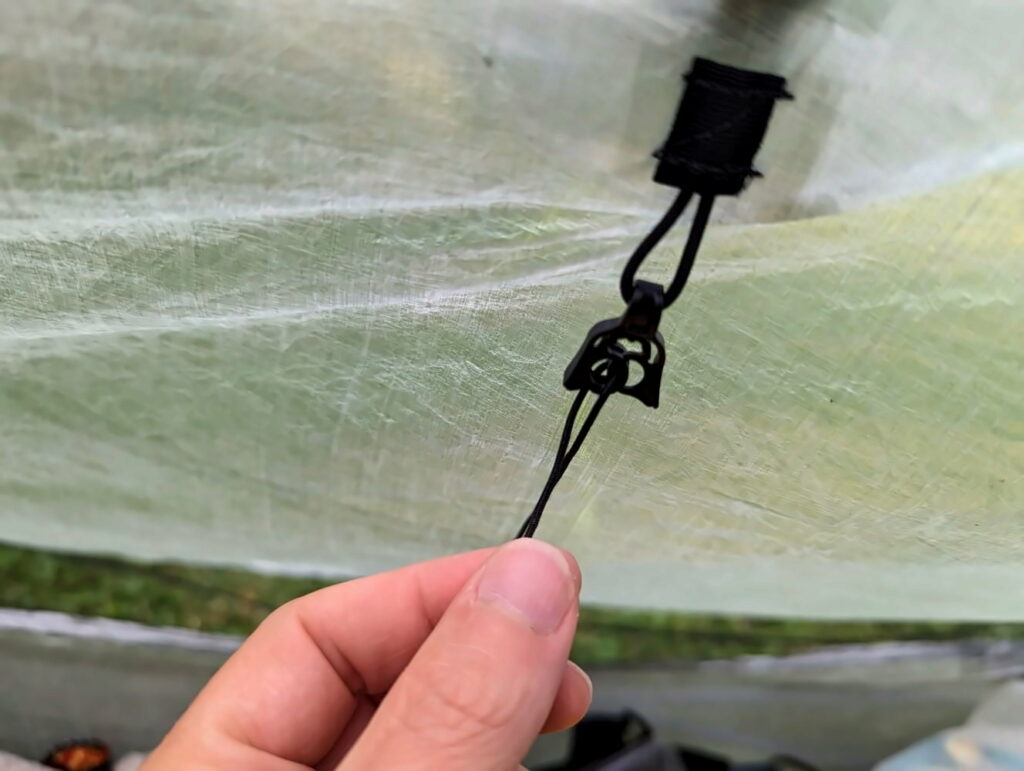
The Duplex Lite is technically designed for two people, which is why it features a separate entrance and vestibule on each side. One detail that may take a little getting used to: the doors don’t use zippers. Instead, the two fly panels are secured with a small hook attached to the center guyline. In practice, however, this works surprisingly well—the hook holds securely and remains stable even in strong gusts of wind.
Detailed views of the Zpacks Duplex Lite (click to enlarge):
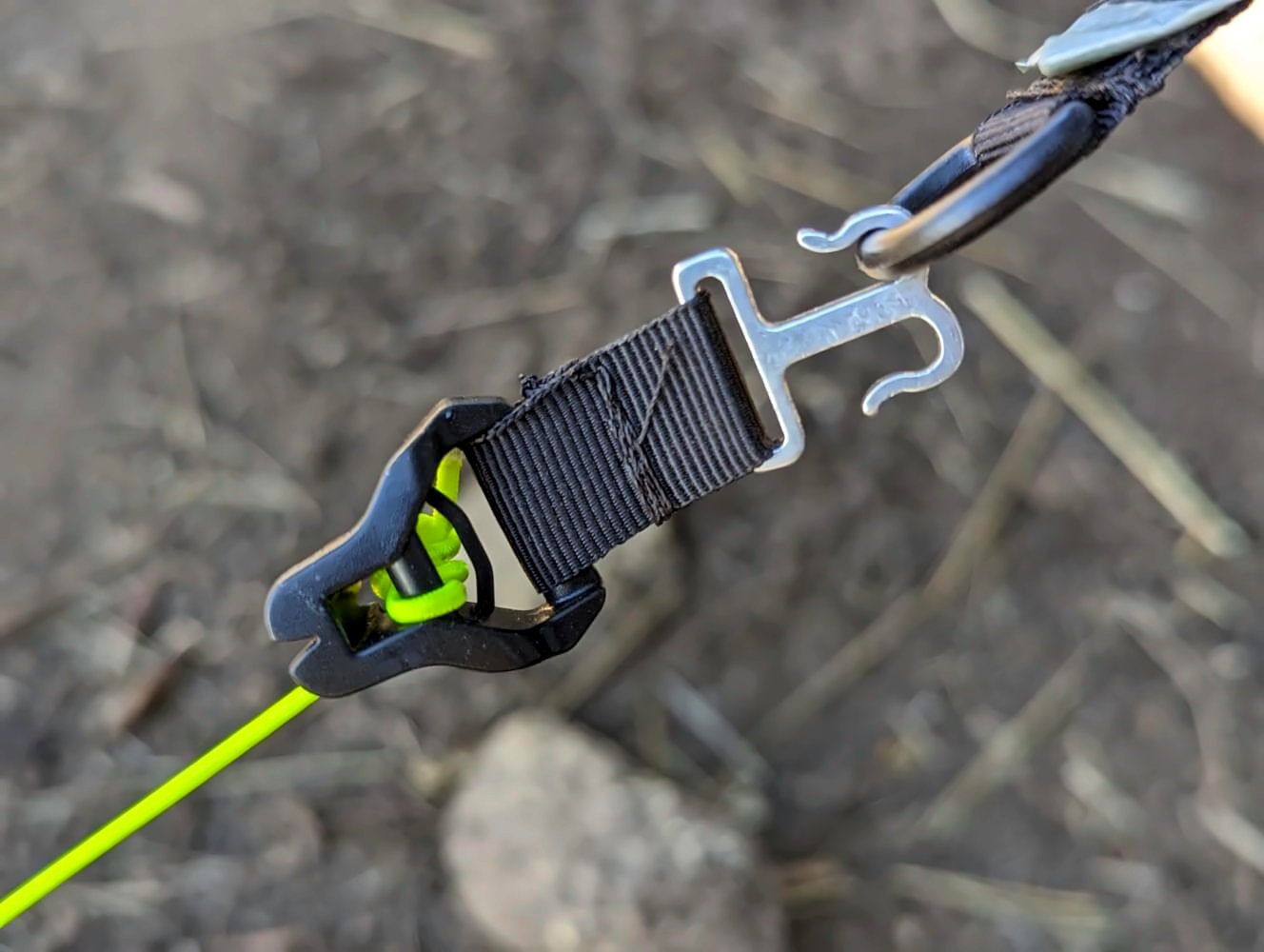
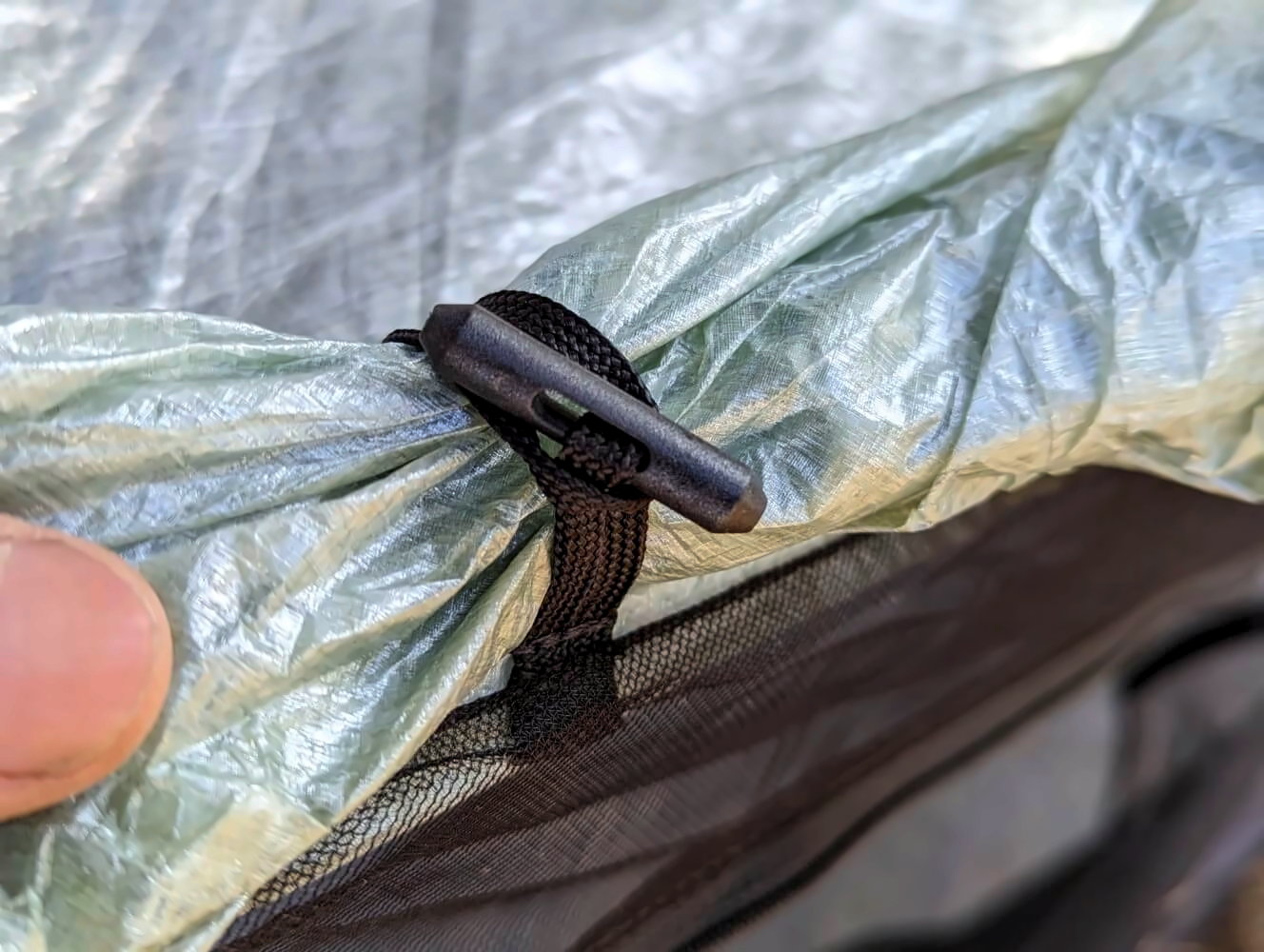
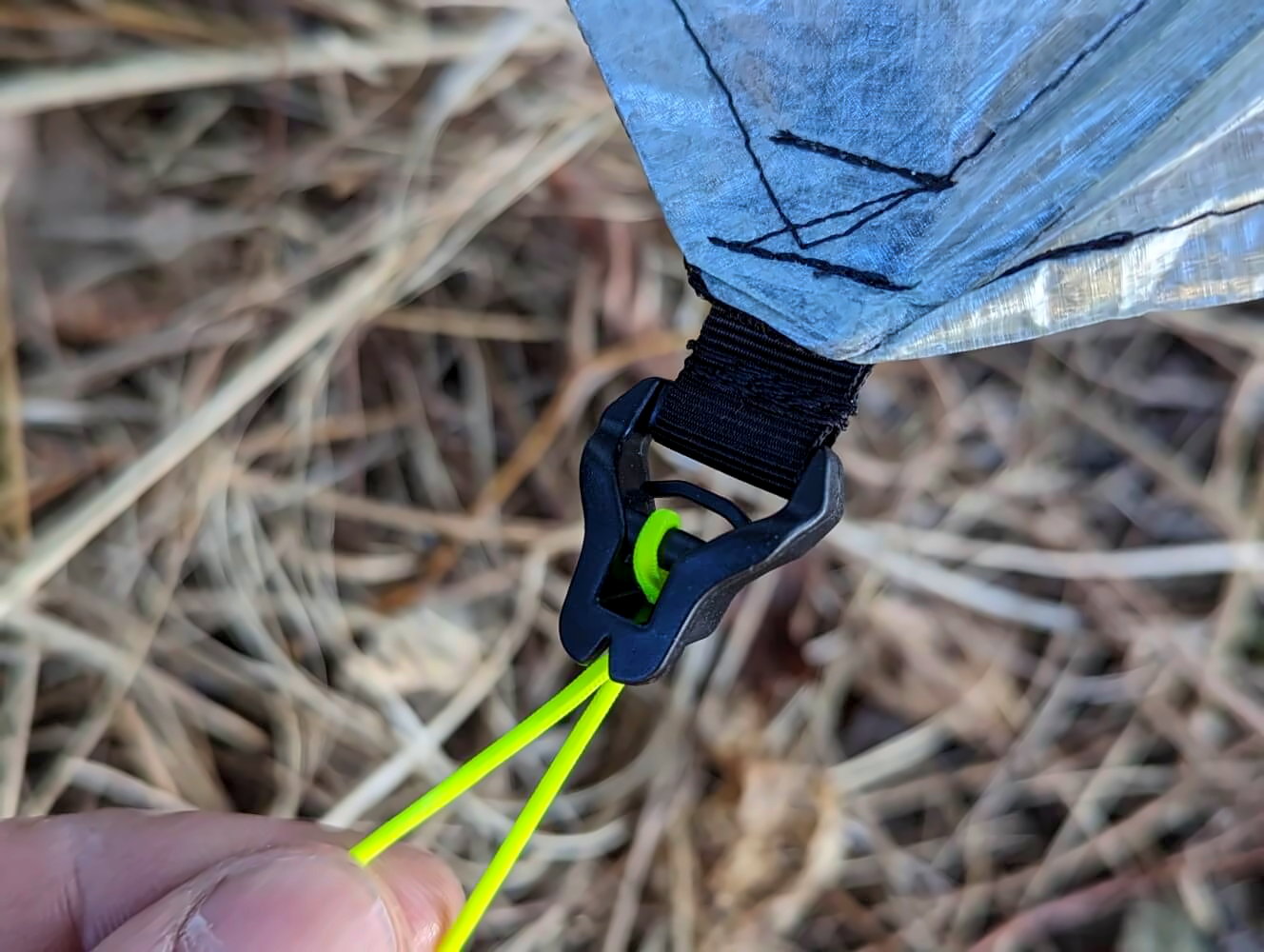
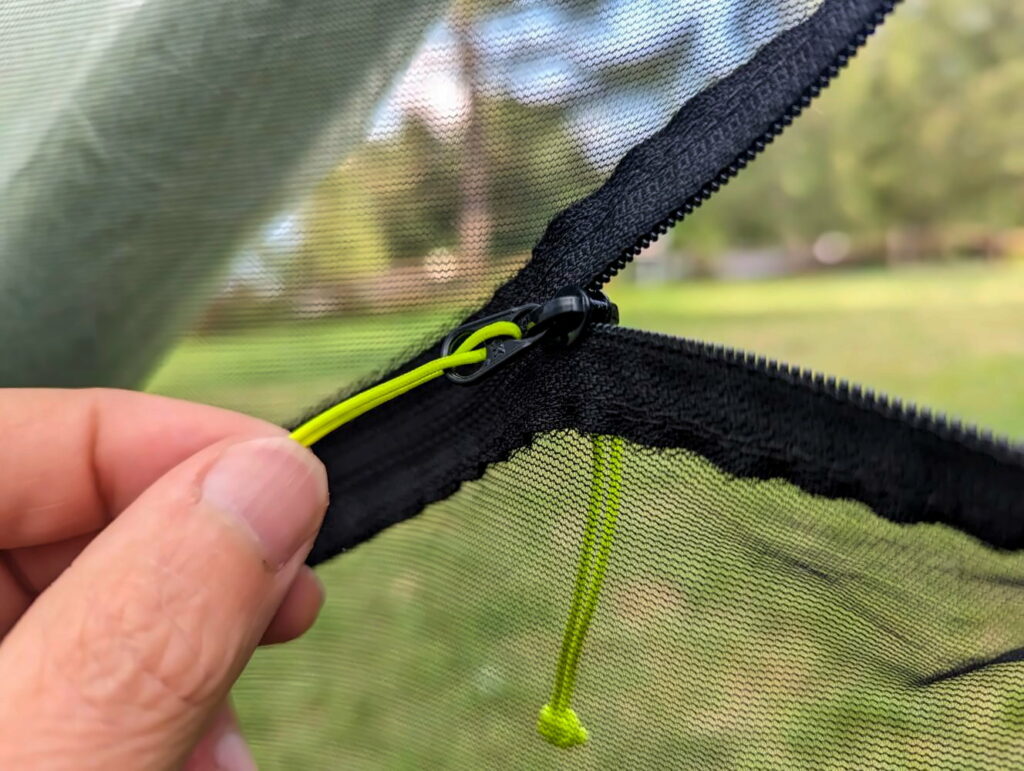
In good weather, you can leave the doors open—either on both sides or just one. Each fly panel can be rolled up and secured with a small plastic hook attached to a loop. The mesh panels along the sides provide insect protection and can be opened with two zippers on each side. Thanks to the long zipper pulls that Zpacks has added, the mesh doors are easy to operate even from inside the tent.
How to pitch the Duplex Lite
Many ultralight tents can be a pain to pitch properly. That’s not the case with the Zpacks Duplex Lite – it’s surprisingly straightforward. By comparison, with my Lunar Solo I had to watch several YouTube videos before I managed to get the “perfect pitch” . With the Duplex Lite, the learning curve is much shorter. Even with little experience, you should be able to set the tent up securely within a few minutes.
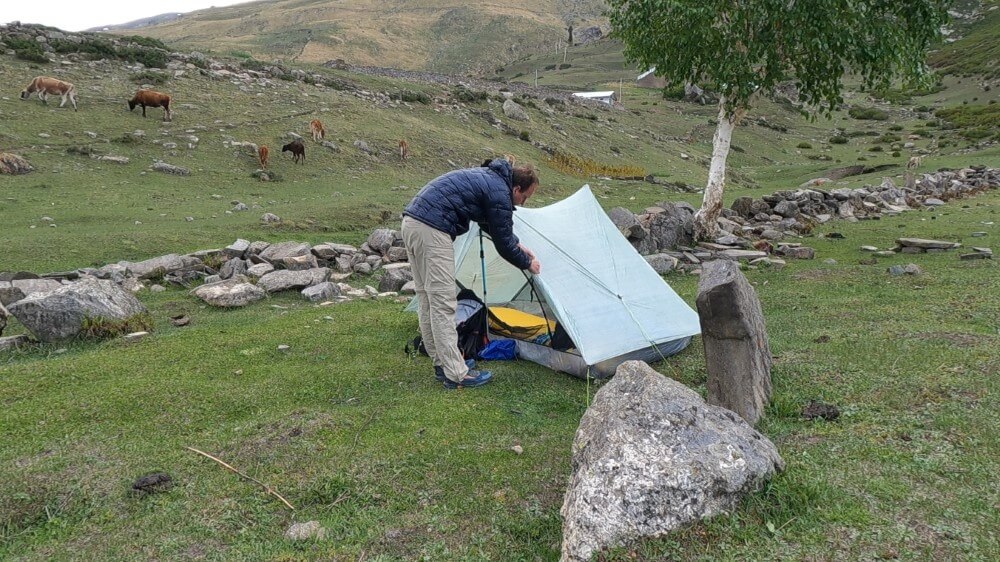
From my experience, the setup works best like this:
- Lay out the tent on the ground and stake out the four corners, keeping the doors roughly aligned at both ends.
- Insert the first trekking pole in the center and raise it, adjusting the guylines if necessary.
- Repeat the process on the other side with the second trekking pole.
- Finally, stake out the side panels to tension the walls and complete the pitch.
Watch the video tutorial for setting up the Duplex tent:
Also worth mentioning are the brightly colored neon guylines. The thin cords run through a small plastic loop and are secured with a simple knot. At first glance, the system doesn’t look particularly robust, but in practice it holds up surprisingly well. I’ll discuss its performance in bad weather in more detail further below.
Dyneema: High-Tech Fabric with Excellent Weather Protection
The Duplex Lite is made from Dyneema Composite Fabric (DCF), a material originally developed for high-performance sailing and now widely used in premium ultralight shelters. I admit that I wasn`t too impressed with the slightly crinkly, plastic-like appearance at first. In practice, however, Dyneema offers several major advantages.
- 🪶 Extremely low weight
- 🏔️ High tensile strength and tear resistance
- 🌦️ Fully waterproof without requiring a coating
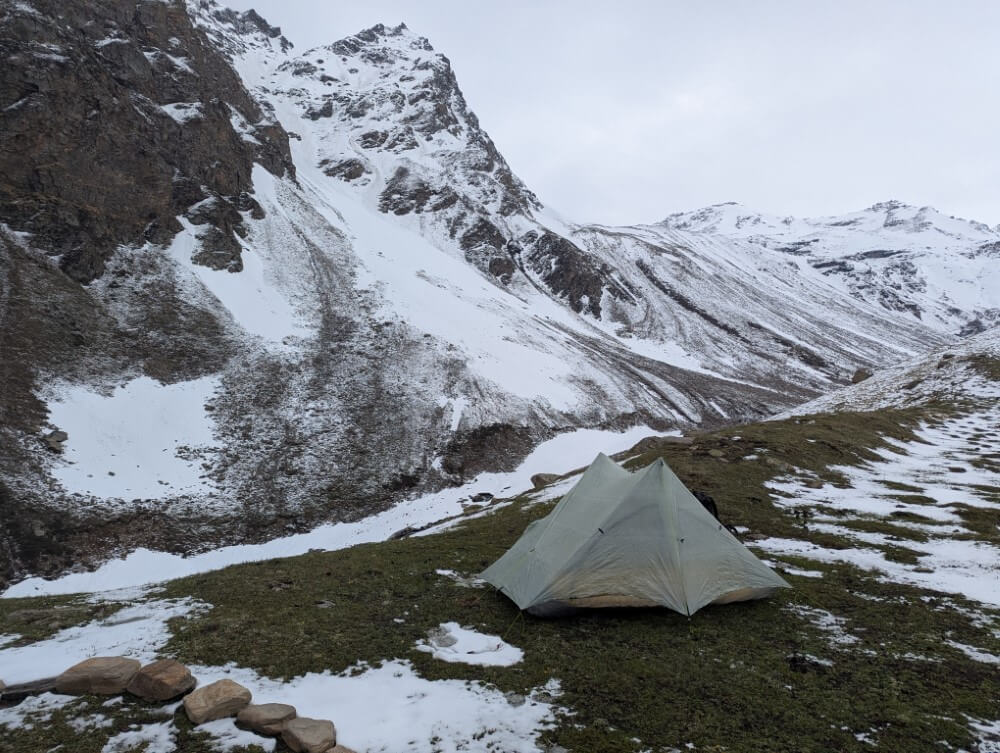
The first two points are fairly obvious advantages for any tent. What really impressed me, however, was the performance of the tent in the rain. Water simply beads up and rolls off the surface. There’s virtually no risk of the fabric soaking through or sagging over time.
That’s a common issue with silnylon tents, where the fly can loosen during prolonged rain and often requires re-tensioning. In real-world conditions, this makes a noticeable difference. Even after hours of rain, the Duplex Lite keeps its shape and remains tightly pitched.
Downsides of Dyneema
Dyneema isn’t without its drawbacks. For one, it’s very expensive—one of the main reasons why the Duplex Lite comes with such a high price tag. The material is also somewhat translucent. You can’t really see inside the tent, but it’s usually possible to make out the silhouette of someone inside.
Perhaps the biggest weakness of Dyneema is its relatively low abrasion resistance. While the fabric is exceptionally strong and tear-resistant, it tends to wear down faster than traditional tent materials like silnylon or silpoly when exposed to friction or heavy stress. I’ll take a closer look at this aspect further down in the review.

Interior Space: A bit tight for two
According to Zpacks, the Duplex Lite is designed for one or two people. Technically, that’s true—you can fit two people inside. In practice, however, space becomes quite limited. There’s little room left for anything else, which means most of your gear has to be stored in the vestibules. Those vestibules are also fairly small, so overall it works—but it’s definitely a tight fit.
To put that into perspective: the popular Therm-a-Rest NeoAir* sleeping pad is about 20 inches (51 cm) wide. The interior width of the Duplex Lite is 40 inches (102 cm). Placed side by side, two pads fit exactly inside the tent—but that’s about it. There’s no extra space left.
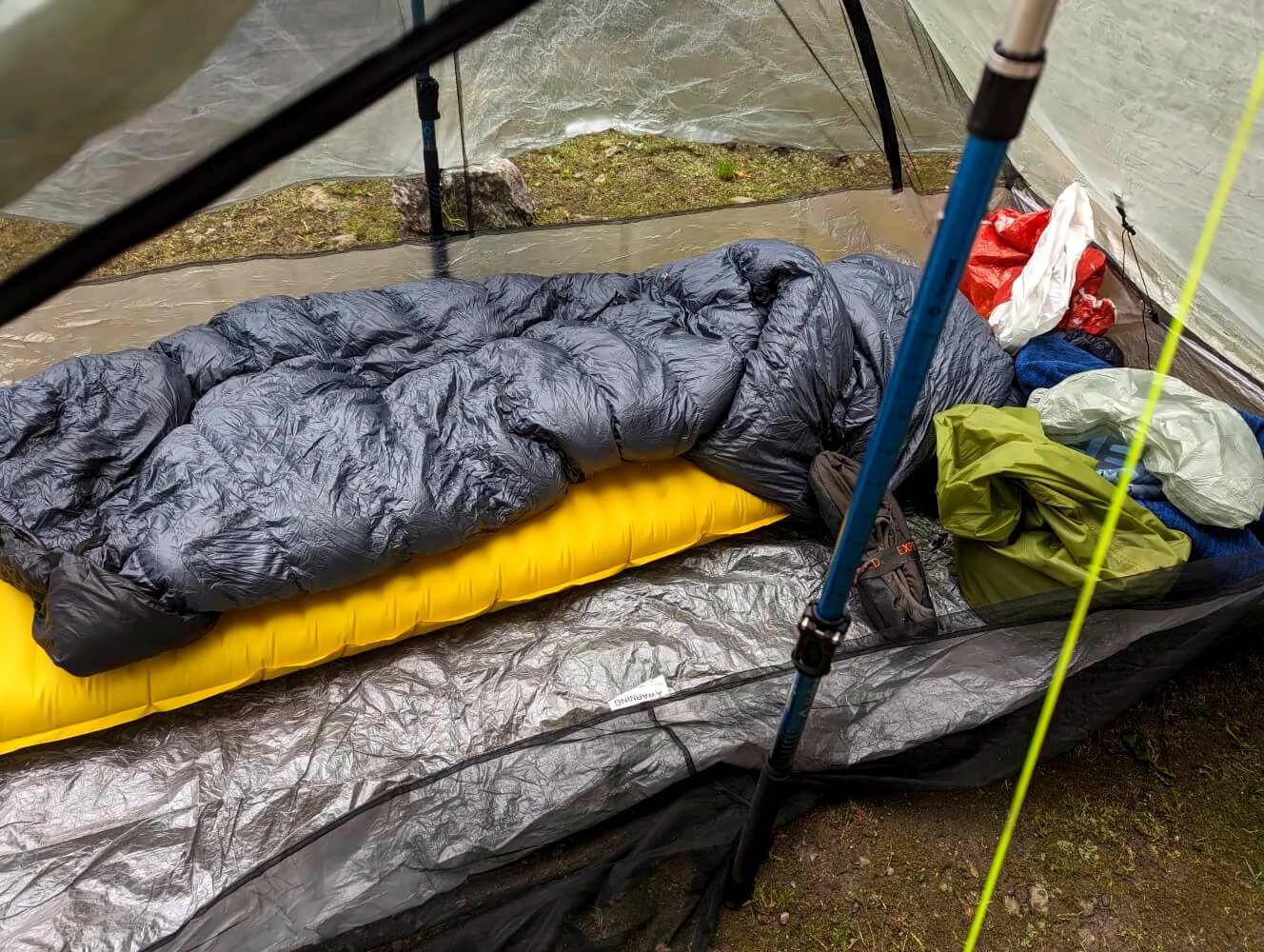
If you plan to use the tent regularly with two people, it’s probably worth considering the standard Duplex instead. It weighs only about 100 grams more, which hardly makes a difference when the weight is shared between two hikers. In my view, the Duplex Lite is better described as a 1.5-person tent—a shelter where a second person can stay in a pinch, but not something you’d want to share on a regular basis.
The real target audience for the Duplex Lite is solo hikers. And in that role, it makes a lot of sense: for one person, the tent offers a generous amount of space. That’s likely the reason this model exists in the first place. On long-distance trails in the United States, many—if not most—thru-hikers already use the standard Duplex as a solo shelter. In that context, releasing a version that’s even lighter without major trade-offs seems like a logical step.
Weather protection: Duplex Lite in the field
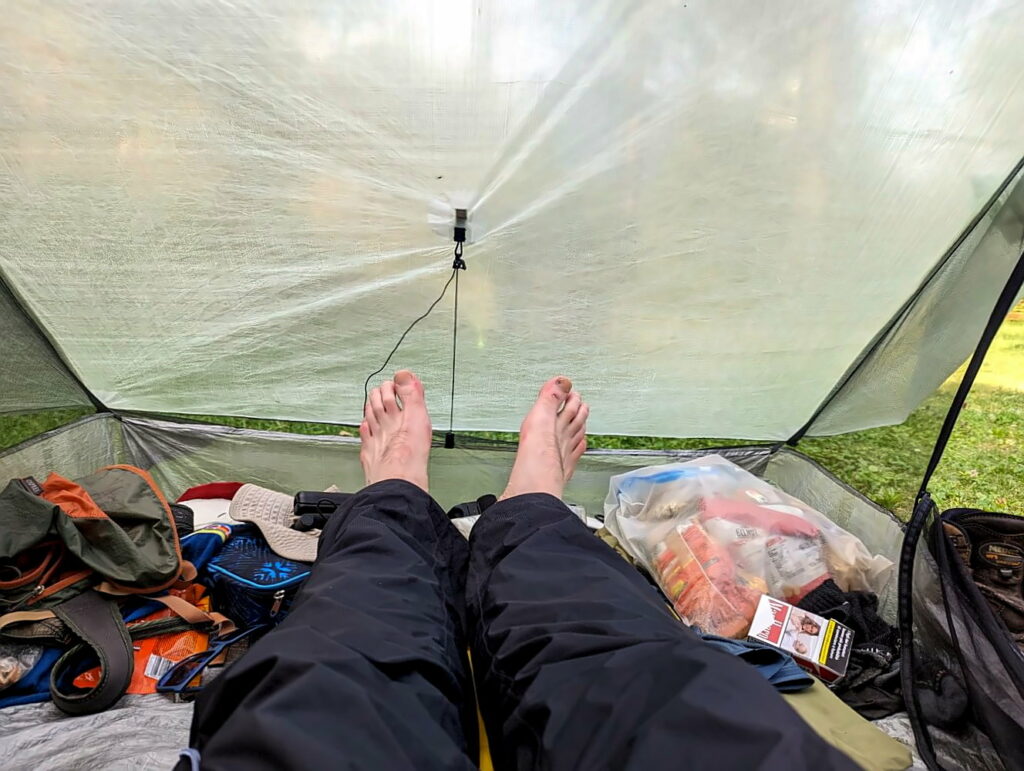
The most important question: How well does the Duplex Lite perform in bad weather? After eight months in the highest mountains on Earth, my answer is simple: very well—especially considering that we’re talking about a trekking-pole tent weighing less than half a kilogram. During my time in the Himalayas, I encountered plenty of rough conditions at high altitude, and the Duplex Lite never let me down.
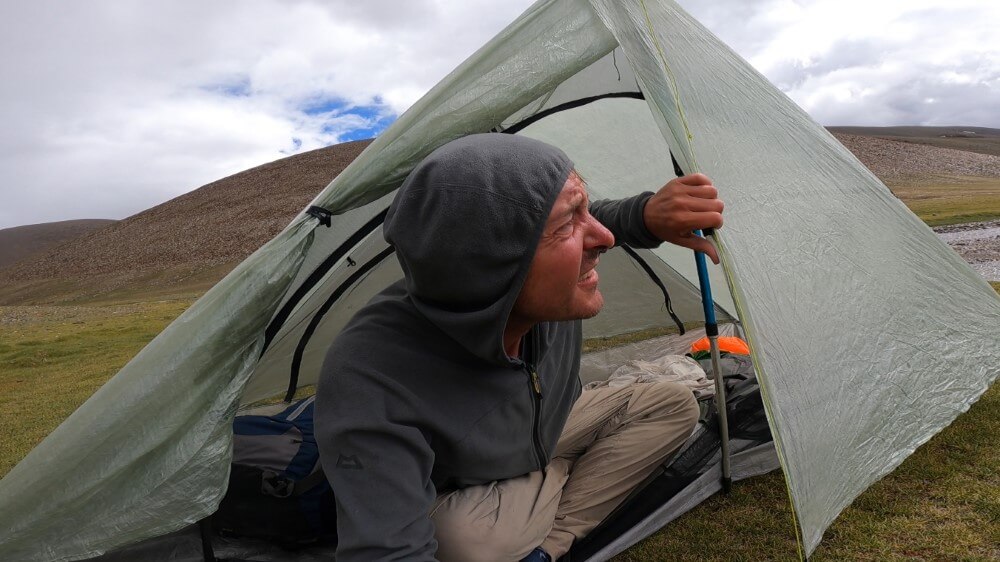
As mentioned earlier, normal rainfall simply beads up and rolls off the Dyneema fly. The tent also handles strong gusts of wind surprisingly well, thanks to its structure supported by two trekking poles, which creates a stable pitch. In particularly bad weather, I lowered the setup slightly by shortening the poles to about 110 cm (43 in) to prevent wind from sweeping underneath the fly. That worked well—the panels can be tensioned close to the ground if necessary.
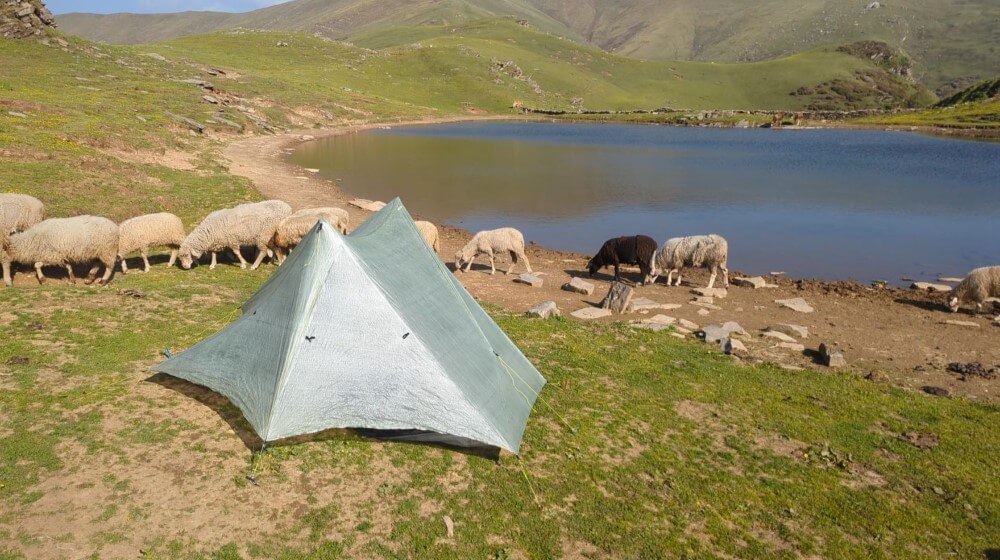
That said, the Duplex Lite remains a fairly airy shelter by design. In strong winds it can move around a bit, and occasionally I had to readjust a trekking pole after it shifted slightly. Even so, considering its incredibly low weight, the tent provides remarkably solid protection—even in conditions that are arguably beyond what a three-season ultralight shelter is designed for.
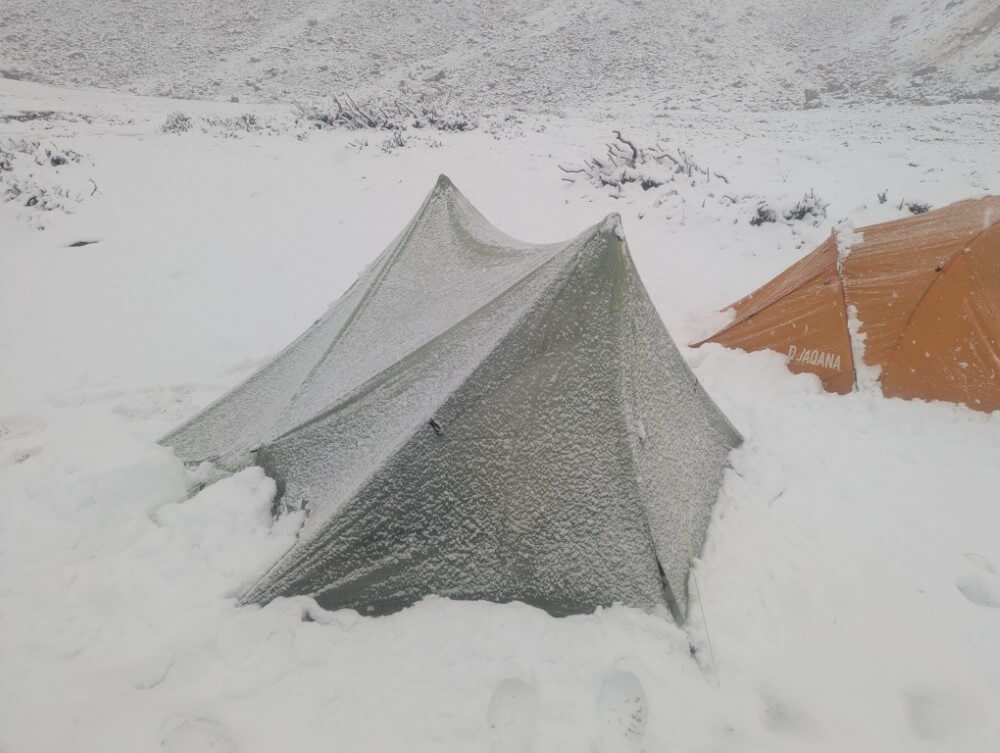
One particularly memorable experience occurred while crossing the main Himalayan range: At 4,300 meters (14,100 ft) on the way to the remote Kang La Pass, the weather turned without warning. Within hours, a snowstorm swept across the high plateau as we tried to negotiate the glaciers from Zanskar into Himachal Pradesh. Violent winds battered us, the sky darkened, and the snow kept piling up with every passing hour. We had no choice but to stop and make an emergency camp.
There was no room for mistakes and this was one of the most extreme camps of my trekking career so far. However, the Duplex Lite got me safely through the night. By morning, it was clear the storm wasn’t letting up. We eventually decided to abandon the route as conditions continued to deteriorate. During the night I had to repeatedly knock snow off the tent roof to prevent it from collapsing under the weight.
Despite that, the Duplex Lite came through the storm without any lasting damage and protected me in a potentially dangerous situation. For me, that says a lot about its real-world durability. This isn’t just a lightweight summer tent for fair-weather trips. The Duplex Lite is capable of handling demanding backcountry conditions where weather protection isn’t simply about comfort—but about safety.
Condensation
Since the Duplex Lite is a single-wall shelter, condensation is an important consideration. Without a protective inner tent, it can be particularly annoying if moisture forms on the inside of the fly and you accidentally brush against it with your sleeping bag during the night.
So far, however, condensation hasn’t been a major issue with the Duplex Lite. I think there are two main reasons for this:
- Dyneema Composite Fabric doesn’t absorb moisture, so water cannot soak into the material.
- The slightly elevated design allows for good airflow, creating space for air to circulate underneath the fly.
Of course, condensation can still occur in cold conditions, especially when there is a strong temperature difference between the inside of the tent and the surrounding air. That’s simply unavoidable with any single-wall shelter.
Even so, the Duplex Lite performs noticeably better in this regard than my Lunar Solo. With the Lunar Solo, the fly is often completely soaked by morning, whereas in the Duplex Lite I usually find only small droplets on the inside of the fly.
Durability: How tough is the Zpacks Duplex Lite?
Dyneema Composite Fabric is known for its exceptional tear strength, and after two years of use I can confirm that claim. Abrasion resistance, however, is a slightly different story. Under friction and sustained tension, Dyneema tends to wear faster than traditional tent fabrics.
During my Himalayan trip, I started noticing this after about six months of use. Over time, tiny micro-holes began to appear around the ridgeline and near the trekking pole attachment points—areas that naturally experience the highest tension when the shelter is pitched.
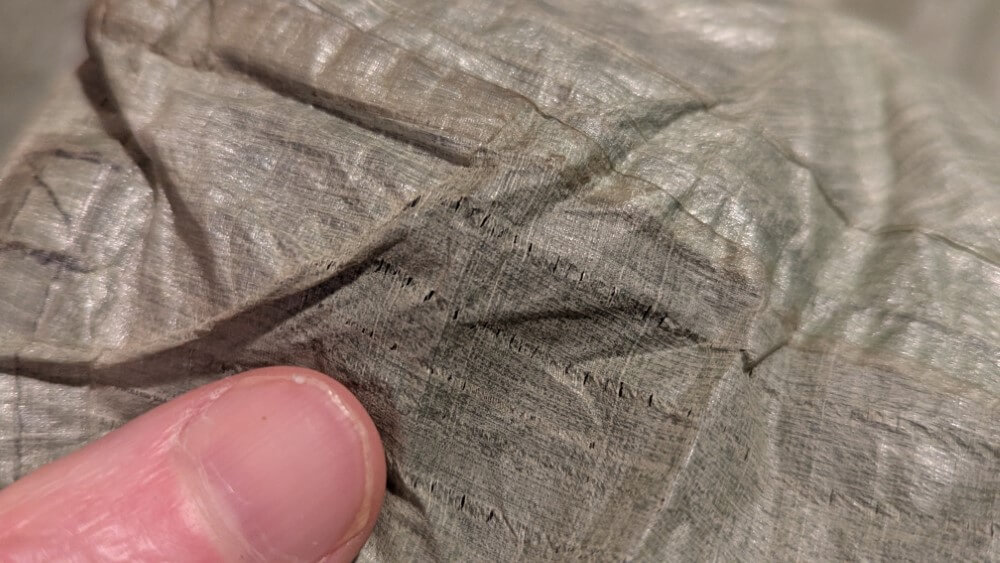
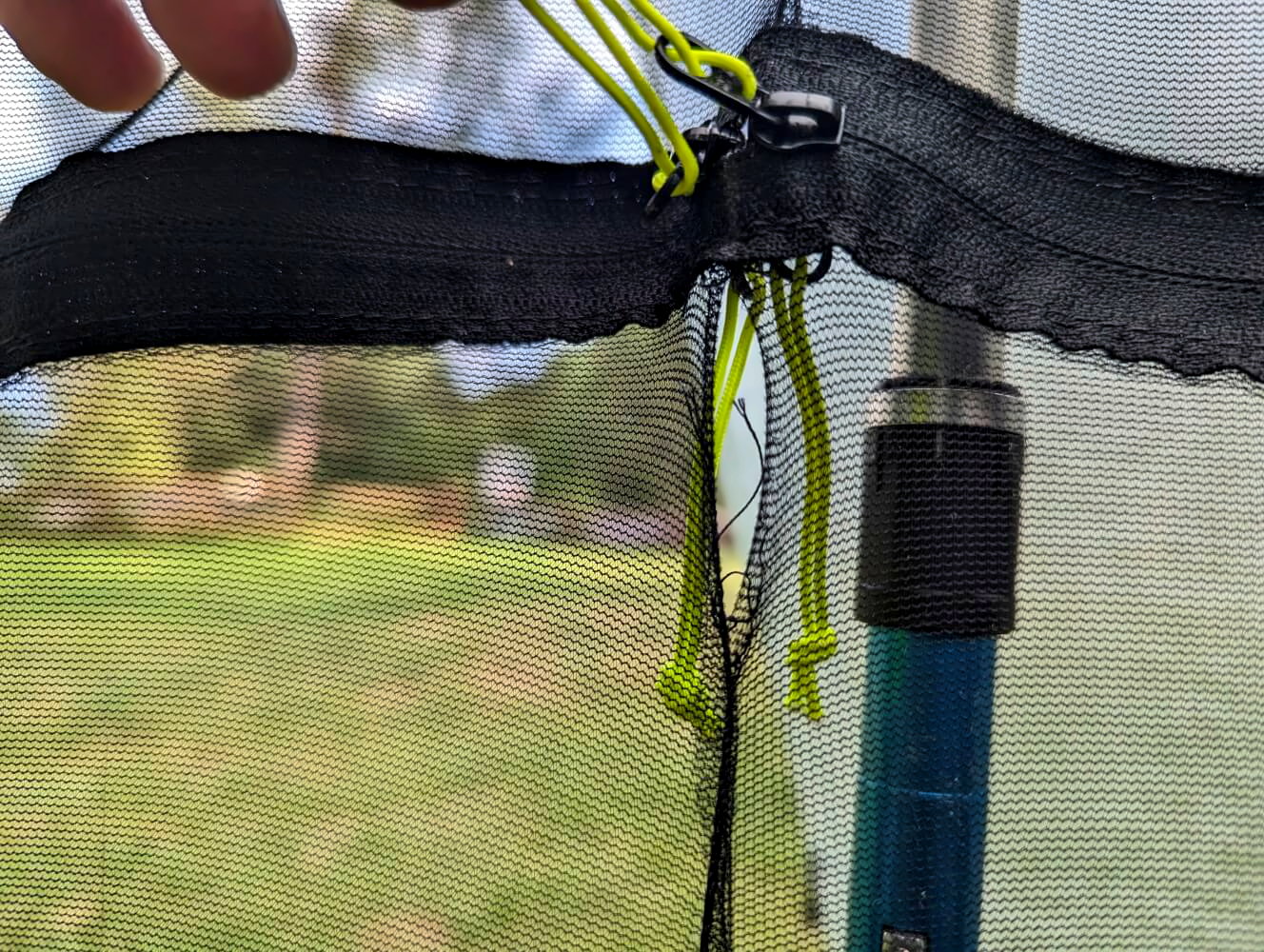
Another weak point are the zippers. After a few months, one of them started to come loose because the adhesive tape that attaches the zipper to the mesh no longer held properly. Over time, I also noticed a few small holes in the tent floor (which, for me personally, wasn’t a major issue), and two of the guylines began to fray.
Repair Options
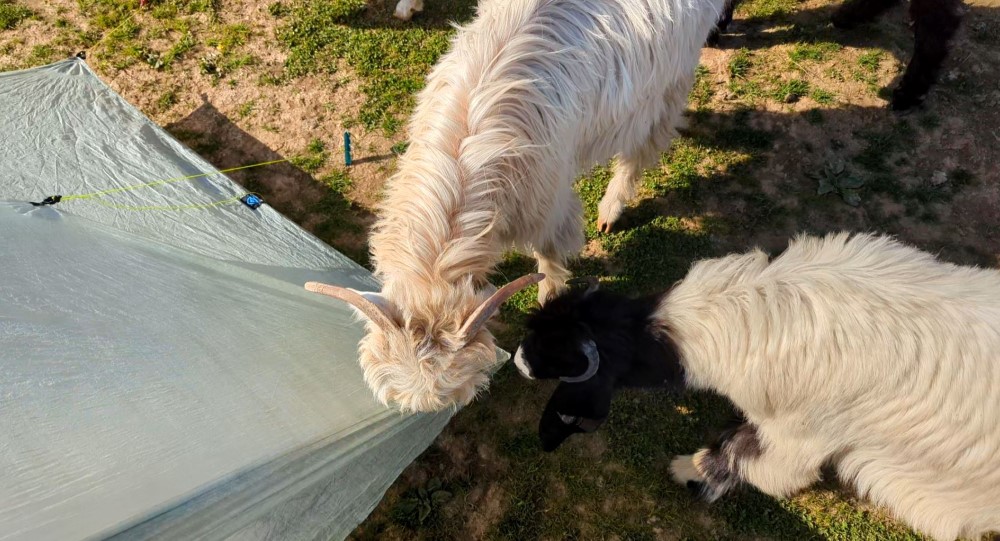
The zipper issue was certainly annoying, but on the trail I was able to fix it temporarily with duct tape. Fortunately, the micro-holes were so small that no rain leaked through during the trip. After returning from my journey, I repaired them myself using DCF repair tape. I’ve also replaced the frayed guylines in the meantime. All the necessary materials are inexpensive and easy to find online.
My Take on Dyneema Wear and Tear
In ultralight hiking forums, the known weaknesses of DCF are often discussed at length. Not without reason: the material is definitely not as robust as fabrics like silnylon, and that’s something buyers should be aware of before making a purchase. For obvious reasons, manufacturers rarely emphasize this point.
That said, I don’t want to join the usual Dyneema-bashing here. There are three main reasons for that:
1. Frequency of Use Matters
I used this tent almost daily for several months. In practice, that equals several “normal” trekking seasons compressed into a single year. This kind of intensive use isn’t typical for most hikers. If you only do two or three trips per year, you’ll likely encounter the typical DCF wear issues much later- or perhaps not at all. In other words, durability depends heavily on how often and how intensively you use your tent.
2. Wear depends on the environment
DCF wear also depends strongly on environmental conditions. In my case, the tent spent months in the harsh climate of the Himalayas, often far above the tree line and exposed to intense UV radiation, strong winds, large temperature swings, and rocky ground. That’s a completely different scenario from spending two or three weeks on a summer trekking trip in Europe. In milder conditions, the material will naturally last longer.
3. Easy to repair
While DCF may wear faster, it’s also relatively easy to repair. Small holes or weak spots can be patched quickly with DCF repair tape. In addition, with this material it’s fairly predictable where potential problem areas are likely to occur – typically along the ridgeline, trekking pole attachment points, and heavily tensioned guy-out points. Those areas can be reinforced proactively and checked during a trip. For longer treks, this makes the material’s wear and tear relatively predictable and manageable.
So I wouldn’t say that DCF is a fabric that simply falls apart on its own. It’s a high-performance material with clearly defined characteristics. If you know exactly what you want to use the tent for, treat the fabric with reasonable care, and are willing to carry out small repairs if necessary, you’ll get an extremely capable piece of gear designed for a very specific purpose.
Just don’t expect to pass the tent down to your grandchildren.

Price and Availability
The practical question: Where can you buy the Duplex Lite, and how much does it cost?
For readers in the United States, the answer is simple—you can order the tent directly from Zpacks, which is by far the most common option. International buyers can do the same, but should expect additional costs such as import duties, taxes, and handling fees.
Zpacks ships worldwide, and according to the manufacturer delivery typically takes about 3–6 days, which is surprisingly fast. The company has also grown significantly in recent years, so long waiting times are no longer common. In the past, many tents were made to order, which sometimes meant waiting weeks for production.
Some European ultralight gear retailers also carry the Duplex models. Buying locally can eliminate import paperwork and customs fees, although prices are often higher since retailers need to include their own margins.
Below is a closer look at the current pricing and additional costs you may encounter.
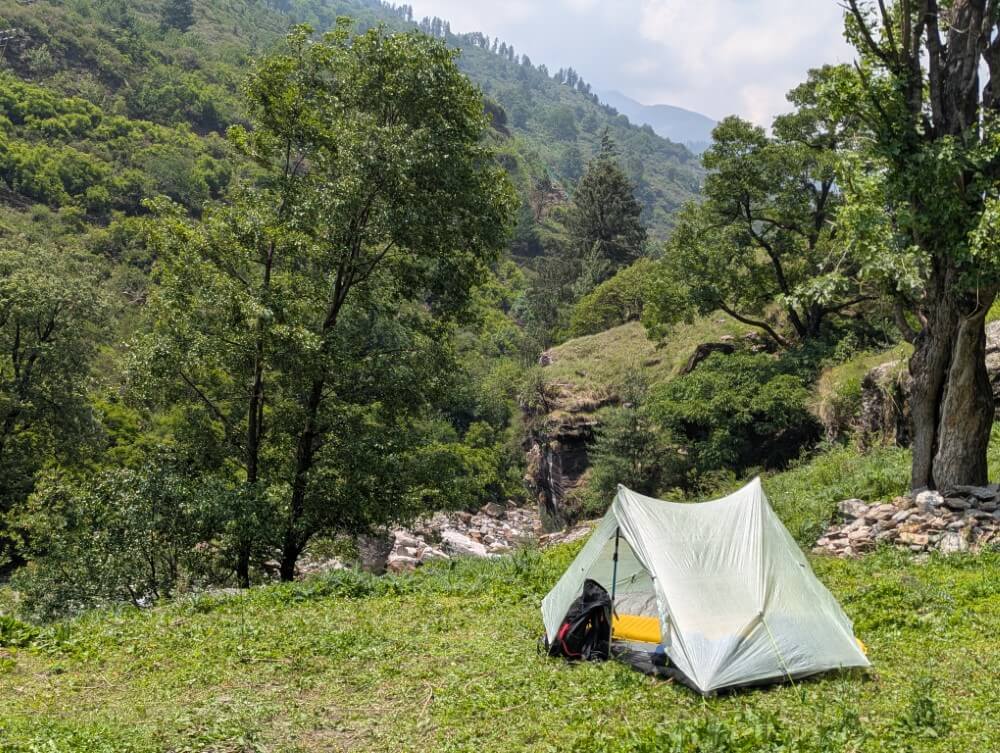
Import Costs Outside the United States
Zpacks currently sells the Duplex Lite for $699. For customers in the United States, that’s essentially the final price aside from shipping and any applicable state sales tax.
For buyers outside the U.S., additional charges usually apply. These may include import duties, VAT (value-added tax), and customs processing fees depending on the country.
As an example, here’s roughly what the costs look like if I order the tent from Germany:
- Price of the Duplex Lite: about €650
- Import duty (7%): €45.50
- Import VAT (19% on item value + duty): €131.05
- DHL customs processing fee: about €6
Total: about €832
So in my case, importing the Duplex Lite directly from the U.S. would bring the total cost to a little over €830.
Some European ultralight gear retailers also sell Zpacks tents. Prices there typically start around €870–€900, and sometimes go even higher depending on availability. Even with import duties and taxes, ordering directly from Zpacks can therefore still be the more cost-effective option.
Out of curiosity, I also asked Zpacks whether the company plans to expand its operations in Europe or set up a local distribution branch in the future. The response was noncommittal—essentially a “maybe.”
For now, it seems there are no concrete plans. Considering how popular Zpacks tents have become among hikers and long-distance trekkers in Europe, that could certainly change in the future. For the time being, however, direct import from the U.S. will likely remain the most common way to buy a Zpacks tent outside the United States.
Final Thoughts on the Zpacks Duplex Lite
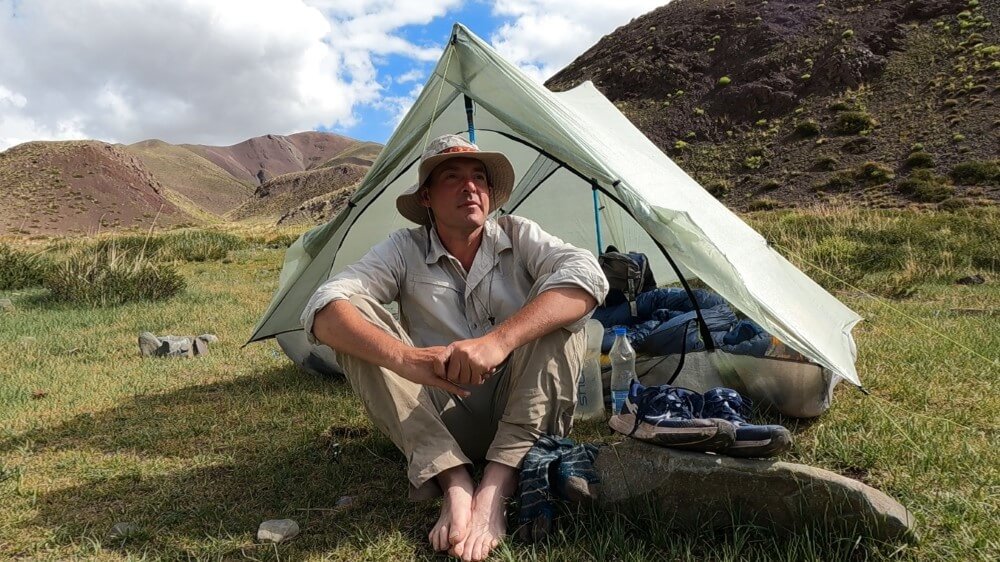
Less weight, longer distances – the Zpacks Duplex Lite has genuinely expanded what’s possible for me on long treks. That’s no exaggeration. This tent has allowed me to cross some of the most remote and spectacular mountain regions on Earth while still enjoying a level of comfort and weather protection that I never would have expected from a shelter this light.
That said, this isn’t an all-purpose camping tent for beginners. The Duplex Lite is a highly specialized piece of gear, built for hikers covering long distances -often in challenging terrain – who want to reduce their pack weight to an absolute minimum. If you only head outdoors occasionally or place maximum durability above everything else, you may well be happier with a tent made from more traditional materials.
Also, a tent this light inevitably comes with a few compromises. For me, however, the advantages clearly outweigh the downsides, which is why the Duplex Lite remains a permanent part of my pack list. Over the past year it has accompanied me through countless memorable moments in the mountains—and if my trips continue the way they have so far, I currently see few lighter options for the adventures ahead.

Did you enjoy reading the article? Then support me and treat me to a virtual coffee.

Without coffee I won’t get up in the mornings and can’t have new adventures:)
Note: This article contains affiliate links to retailers such as Amazon. If you purchase a product through one of these links, I may earn a small commission that helps support this blog. There’s no extra cost to you. If you found this article helpful, using these links is a great way to support my work.
Have questions or suggestions for other great ultralight tents? Let me know in the comments—I’d love to hear from you!